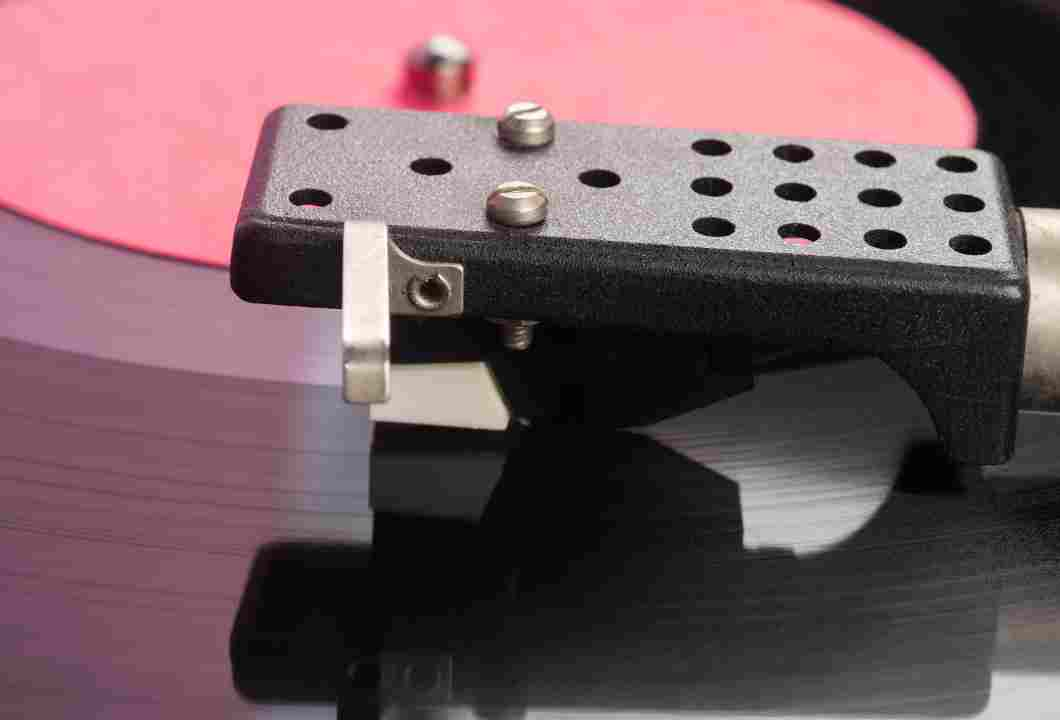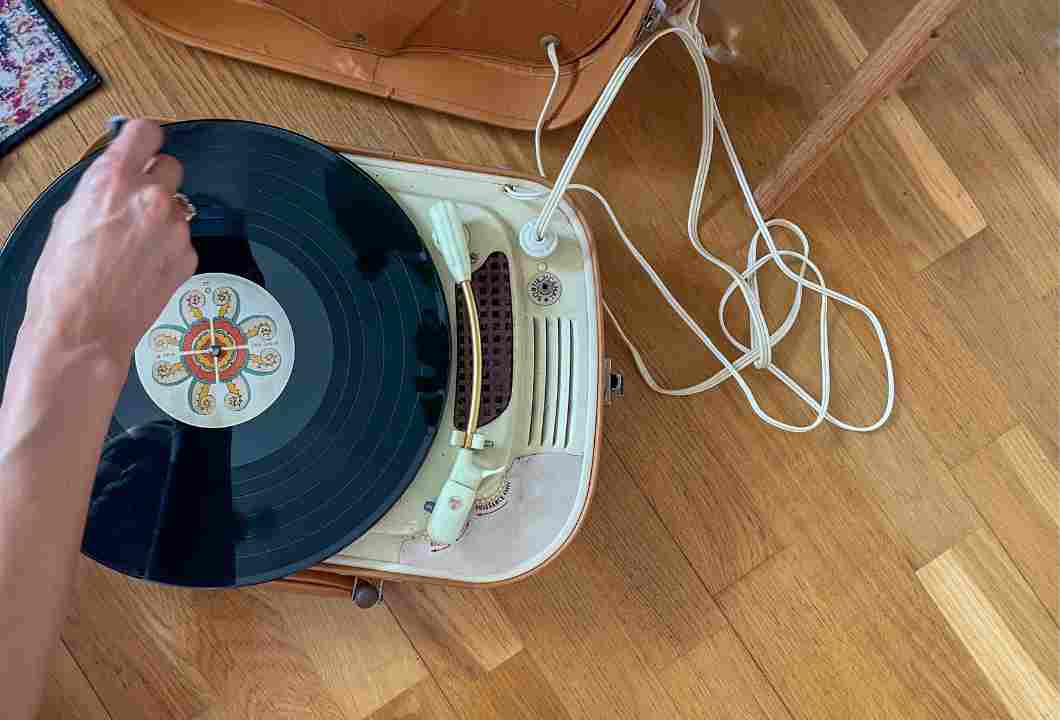

A turntable can sound wrong even when nothing appears to be broken.
The cartridge may be in good condition, the stylus may be clean, and the records may be well cared for, yet the music still feels unbalanced. In one system, the sound may seem dull, veiled, or lacking air. In another, it may become sharp, thin, or tiring after only a few songs.
When this happens, the cartridge is often blamed first. But the problem may not be the cartridge itself. It may be the way the cartridge interacts with the cables and phono preamp connected to it.
Two of the most important factors in that interaction are impedance and capacitance.
These terms may sound technical, but their effects are easy to recognize once you know what to listen for.
Quick Answer
If your turntable sounds dull, harsh, or strangely unbalanced, check the electrical loading between the cartridge and the phono stage.
For moving magnet cartridges, excessive cable or input capacitance can alter the upper frequencies. For moving coil cartridges, an unsuitable impedance setting can change tonal balance, dynamics, and openness.
Before replacing the cartridge, confirm:
- the cartridge type;
- the manufacturer’s recommended load;
- the phono preamp settings;
- the length and type of RCA cables;
- tracking force, alignment, and stylus condition.
Why Electrical Matching Matters
A turntable is both a mechanical and an electrical system.
The stylus follows the record groove, and the cartridge converts that movement into a very small electrical signal. That signal then travels through:
- the cartridge coils;
- tonearm wiring;
- RCA cables;
- the phono preamp;
- the amplifier;
- the speakers.
Before the signal reaches the amplifier, it is already being influenced by the electrical load around it.
If the cartridge and phono stage are not well matched, the system may still produce music, but the tonal balance can shift. Detail may disappear, treble may become exaggerated, or the presentation may feel flat and unnatural.
This explains why the same cartridge can sound excellent in one system and disappointing in another.
What Impedance Means in Practice
Impedance is the electrical load the cartridge sees when it sends its signal into the phono stage.
You do not need to calculate it to understand its importance. The practical point is that the cartridge is designed to operate within a particular electrical environment.
When that environment is unsuitable, the sound can change.
Moving Magnet Cartridges
Most moving magnet, or MM, cartridges are designed to work with a standard input resistance of approximately 47k ohms.
Many phono inputs use this value by default. However, resistance is only part of the loading equation. MM cartridges are also affected by capacitance from the tonearm wiring, interconnects, and phono stage.
When the overall loading is not appropriate, you may hear:
- reduced treble clarity;
- weak cymbal detail;
- less presence in vocals;
- a heavy or closed-in presentation;
- excessive brightness in part of the upper range;
- listening fatigue.
The result is not always simply “too bright” or “too dull.” An unsuitable load can create an uneven response that sounds bright in one area and muted in another.
Moving Coil Cartridges
Moving coil, or MC, cartridges usually require more careful impedance matching.
Unlike most MM cartridges, MC models may be designed for different load values depending on the cartridge and phono stage.
Changing the impedance setting can affect:
- tonal balance;
- transient attack;
- soundstage openness;
- bass control;
- perceived detail;
- listening fatigue.
A lower load may make some systems sound more controlled or subdued. A higher load may sound more open or energetic. However, the correct choice should begin with the cartridge manufacturer’s recommendation rather than guesswork.
What Capacitance Means in Practice
Capacitance is especially important with moving magnet cartridges.
It is not created by only one component. It is the combined result of several parts of the signal path:
- internal cartridge characteristics;
- tonearm wiring;
- attached RCA cables;
- external interconnects;
- phono preamp input capacitance.
These values add together.
That is why replacing a short phono cable with a much longer one can change the sound, even when the new cable appears to be of higher quality.
Where Capacitance Comes From
The total capacitance seen by an MM cartridge may include:
- approximately 20–50pF from tonearm wiring;
- capacitance from the turntable’s RCA cable;
- additional capacitance from extension cables;
- the input capacitance of the phono preamp.
The exact values vary, but the important principle is simple: every cable and input contributes to the total.
If the cartridge manufacturer recommends a range such as 100–200pF, that range normally refers to the total load, not only the setting printed on the phono preamp.
How Excessive Capacitance Can Sound
Too much capacitance can alter the upper-frequency response of an MM cartridge.
Depending on the cartridge design, the result may sound:
- dull or veiled;
- overly warm;
- less spacious;
- weak in cymbal shimmer;
- lacking in vocal clarity;
- sharp in one narrow area but rolled off above it.
This last effect is important. Excessive capacitance does not always create a uniformly soft sound. It can produce a high-frequency peak followed by an early roll-off, making the system sound both aggressive and closed-in.
How Low Capacitance Can Sound
Very low capacitance is not automatically better.
Some MM cartridges are designed to operate within a specific range. If the total capacitance is too low for that design, the presentation may sound:
- lean;
- overly forward;
- bright;
- less balanced;
- impressive at first but tiring over time.
However, the exact effect depends on the cartridge. This is why the manufacturer’s recommended range is a better starting point than assuming the lowest possible capacitance is always ideal.
Why Impedance and Capacitance Work Together
Impedance and capacitance are separate electrical properties, but they influence the cartridge at the same time.
Together with the cartridge’s inductance, they shape the frequency response of the system.
This interaction explains why:
- identical cartridges can sound different in different systems;
- a cable change can affect tonal balance;
- a well-reviewed cartridge may sound disappointing with a particular phono stage;
- adjustable phono inputs can produce audible changes;
- a system can sound technically functional but musically unconvincing.
This is not audio mysticism. It is part of the electrical behavior of the cartridge and phono stage.
Signs the Loading May Be Wrong
Loading problems can resemble several other faults, so no single symptom proves that impedance or capacitance is the cause.
However, loading is worth checking when:
- many clean records sound dull;
- vocals lack presence;
- cymbals lose shimmer or decay;
- the system sounds harsh at normal volume;
- stereo depth seems flatter than expected;
- the sound changed after replacing cables;
- a new cartridge sounds worse than the previous one;
- long listening sessions become tiring;
- the same turntable sounds better through another phono stage.
The most useful clue is consistency. If many familiar records show the same tonal problem, the issue is likely somewhere in the playback chain rather than in the records themselves.
Step 1 — Identify the Cartridge Type
Confirm whether your cartridge is:
- moving magnet;
- moving iron;
- high-output moving coil;
- low-output moving coil.
Do not rely only on appearance. Check the model number and manufacturer documentation.
The cartridge type determines which phono input and loading settings are appropriate.
Step 2 — Find the Recommended Loading
Look for the cartridge manufacturer’s specifications.
For MM cartridges, this may include:
- recommended resistance, commonly 47k ohms;
- recommended capacitance range;
- recommended tracking force.
For MC cartridges, look for:
- recommended load impedance;
- output voltage;
- required gain;
- recommended tracking force.
Use these values as your starting point.
Step 3 — Check the Phono Preamp
If your phono stage has adjustable settings, verify:
- MM or MC mode;
- input impedance;
- input capacitance;
- gain.
Do not assume the current setting is correct simply because sound is present.
A cartridge can produce music through an unsuitable setting while still sounding noticeably wrong.
Step 4 — Check Cable Length
Long RCA cables can add significant capacitance.
For a typical MM setup, keep the cable between the turntable and phono preamp reasonably short. Avoid unnecessary extension cables, adapters, and switch boxes during testing.
If the turntable’s sound changed after adding or replacing a cable, return temporarily to the previous cable or test with a shorter one.
Step 5 — Change Only One Variable
Do not change the cable, phono settings, tracking force, and cartridge alignment at the same time.
Make one change, then listen again using the same record and volume level.
Pay attention to:
- vocal presence;
- cymbal decay;
- treble smoothness;
- bass definition;
- stereo depth;
- listening fatigue.
One controlled change provides useful information. Several simultaneous changes do not.
Step 6 — Compare with Another Phono Stage
If possible, test the turntable with another known-good phono preamp.
This is one of the clearest ways to separate a cartridge problem from a loading or phono-stage problem.
If the sound becomes more balanced through the second preamp, compare the gain, impedance, and capacitance specifications of both units.
Step 7 — Recheck the Mechanical Setup
Electrical loading is only part of the system.
Before making a final judgment, confirm:
- the stylus is clean;
- tracking force is correct;
- anti-skate is reasonable;
- the cartridge is aligned;
- the stylus is not worn;
- the cartridge is mounted securely.
Poor alignment or mistracking can also create harshness, dullness, and reduced detail.
Why Vintage Turntables Need Extra Attention
Vintage turntables often use fixed phono cables, internal wiring, and cartridges selected for the equipment standards of their time.
When these turntables are connected to modern systems, the signal path may include:
- replacement RCA cables;
- adapters;
- external phono preamps;
- longer cable runs;
- modern cartridges;
- amplifiers without dedicated phono inputs.
Each change can affect the electrical load.
A turntable may be mechanically restored and still sound disappointing because the cartridge, cable, and phono stage are not working well together.
A Practical Testing Order
When a turntable sounds dull or harsh, check the system in this order:
- Clean the stylus.
- Confirm tracking force.
- Check cartridge alignment.
- Verify MM or MC mode.
- Confirm phono gain.
- Check impedance settings.
- Check capacitance settings.
- Remove unnecessary cables or adapters.
- Compare with another phono stage if possible.
This order prevents you from replacing a cartridge before ruling out simpler causes.
What Correct Matching Sounds Like
Correct loading does not make every record bright, highly detailed, or dramatic.
Instead, the system sounds more balanced.
You may notice:
- clearer vocals;
- more natural cymbal decay;
- better separation between instruments;
- less listening fatigue;
- a more stable stereo image;
- bass that feels controlled rather than heavy;
- treble that sounds open without becoming sharp.
The best result often does not call attention to one frequency range. The music simply feels more believable.
Frequently Asked Questions
Does every moving magnet cartridge need 47k ohms?
Most MM cartridges are designed for a 47k-ohm input, but you should still check the manufacturer’s specifications. Capacitance also matters and may vary between cartridges.
Can RCA cables really change turntable sound?
Yes, especially with MM cartridges. Cable capacitance contributes to the total load seen by the cartridge. Very long or high-capacitance cables can alter high-frequency response.
Is lower capacitance always better?
No. The best value is usually within the cartridge manufacturer’s recommended range. Extremely low capacitance may not provide the intended tonal balance for every cartridge.
Can wrong loading damage the cartridge?
Incorrect impedance or capacitance usually changes sound rather than physically damaging the cartridge. However, wrong phono mode, excessive gain, or poor mechanical setup can create other problems.
Why does my cartridge sound good through one amplifier but dull through another?
The two amplifiers may have different phono input capacitance, impedance, gain, or RIAA accuracy. The cartridge is interacting with a different electrical load.
Quick Checklist
Before replacing the cartridge, confirm:
- the exact cartridge model;
- whether it is MM or MC;
- the recommended impedance;
- the recommended capacitance;
- the phono preamp mode;
- the gain setting;
- the cable length;
- the tracking force;
- the cartridge alignment;
- the stylus condition.
Final Thoughts
Impedance and capacitance are not minor details reserved for advanced hobbyists. They are part of the basic electrical relationship between the cartridge, cables, and phono stage.
When that relationship is unsuitable, a perfectly functional turntable can sound dull, harsh, flat, or tiring.
Before blaming the cartridge or buying an upgrade, confirm that the existing components are properly matched. A shorter cable, a corrected phono setting, or a more suitable input load may solve the problem without replacing anything.
A good analog system does not need to sound exaggerated. It should sound balanced, natural, and easy to listen to.