
Few things are more frustrating to a vinyl enthusiast than a record that skips. The moment the stylus jumps out of the groove, immersion is broken and concern sets in: is something wrong with the turntable, or is the record itself beyond saving? In the clinic of turntable diagnosis, skipping is one of the most common complaints—and also one of the most misunderstood.
This article approaches the problem the way a restoration workshop would: with method, measurement, and respect for both the mechanical precision of the turntable and the physical reality of vinyl records. By the end, you will be able to clearly differentiate tonearm adjustment issues from warped discs, understand why each causes skipping, and follow a structured diagnostic path before taking corrective action—avoiding the kind of guesswork that often leads to unnecessary damage.
Understanding What “Skipping” Really Means
Skipping is not a single phenomenon. It can manifest as:
- The stylus jumping forward to a later groove
- The stylus repeating the same groove endlessly
- Sudden mistracking during loud or dynamic passages
Each behavior points toward a different root cause. Treating all skips as the same problem often leads to incorrect adjustments that create new issues rather than solving the original one—especially when symptoms overlap with problems discussed in Inner Groove Distortion at the End of the Side: Causes and How to Reduce It.
At its core, skipping occurs when the stylus loses proper contact with the groove walls. The diagnostic question is not whether contact is lost, but why.
The Mechanical Balance of a Turntable
A properly set up turntable operates in a delicate equilibrium. Several forces interact simultaneously:
- Vertical tracking force (VTF)
- Anti-skating force
- Tonearm geometry and alignment
- Stylus compliance
- Record flatness and groove integrity
When even one element drifts outside specification, the system compensates poorly, and skipping becomes likely. This is why professional diagnosis always begins with the turntable itself—not the record.
Many adjustment-related errors originate from misunderstanding these relationships, an issue expanded upon in Tracking Force and Anti-Skate: How to Choose Safe Values for Your Cartridge.
Tonearm Adjustment: The Most Common Culprit
Why Misadjustment Causes Skipping
The tonearm’s job is to hold the stylus in the groove with consistent pressure and geometry. When that balance is disturbed, the stylus may ride too lightly, too heavily, or at an incorrect angle.
Common adjustment-related causes include:
- Tracking force set below cartridge specification
- Anti-skate set incorrectly or ignored
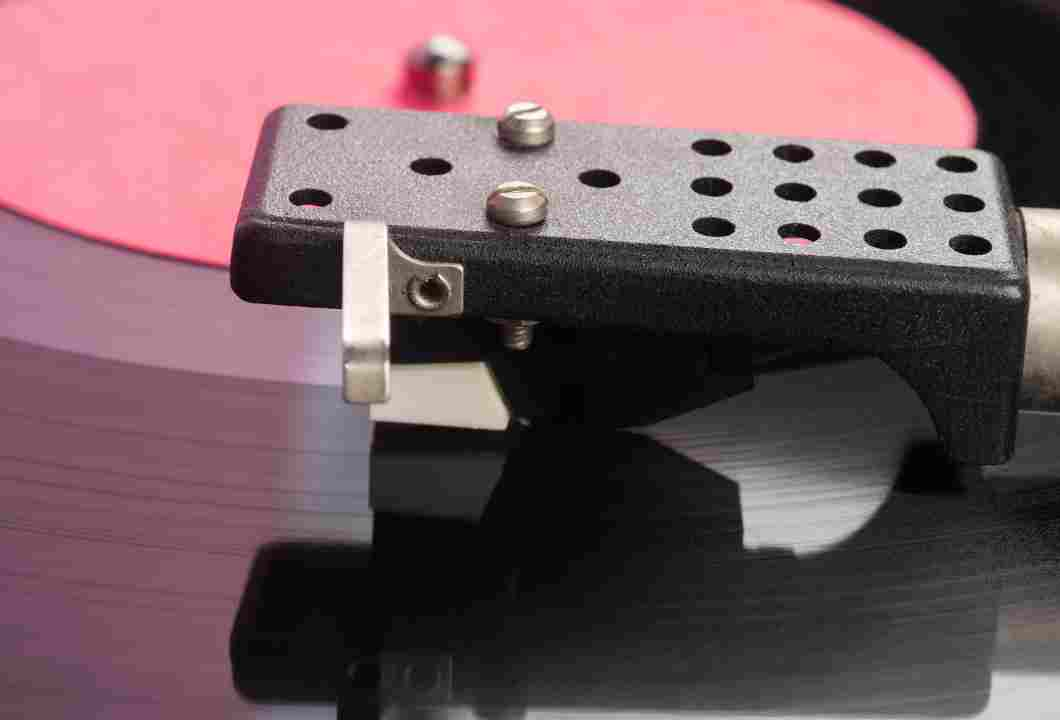
- Cartridge misalignment in the headshell
- Stiff, damaged, or contaminated tonearm bearings
These issues almost always affect multiple records, not just one—a key distinction from record-related faults.
Step-by-Step: Diagnosing Tonearm-Related Skipping
Step 1: Verify Tracking Force
Use a digital stylus force gauge rather than relying solely on counterweight markings. Set VTF precisely within the cartridge manufacturer’s recommended range. Undertracking is far more dangerous than slightly heavier tracking and is a frequent cause of skipping and groove damage.
Step 2: Set Anti-Skate Properly
Anti-skate should roughly correspond to tracking force, but fine tuning matters. Incorrect anti-skate can cause skipping toward either the inner or outer grooves, depending on direction—often mistaken for record defects.
Step 3: Check Cartridge Alignment
Using a proper protractor, confirm:
- Correct overhang
- Proper offset angle
- Cartridge body square to the alignment grid
Alignment errors often become most obvious near the inner grooves, overlapping with symptoms discussed in Skipping Records: How to Tell Tonearm Adjustment from a Warped Disc’s companion diagnostics such as Inner Groove Distortion at the End of the Side: Causes and How to Reduce It.
Step 4: Inspect Tonearm Bearings
With the turntable powered off, gently move the tonearm laterally and vertically. Any stiffness, notchiness, or resistance indicates bearing issues that can cause unpredictable skipping—even with correct settings.
Warped Discs: A Different Mechanical Reality
What Warping Does to the Groove
A warped record introduces vertical motion that the tonearm must follow. If the warp exceeds the tonearm’s ability to track smoothly, the stylus momentarily unloads or overloads, resulting in a skip.
Unlike adjustment issues, warps cause skipping consistently at the same point on every play.
Types of Warps and Their Effects
- Edge warp: Visible vertical movement near the outer edge, often causing skipping at the start of playback
- Dish warp: The record bows upward or downward, affecting tracking force across the entire side
- Ripple warp: Repeating undulations that may cause intermittent mistracking, especially with stiff cartridges
Each warp type interacts differently with tonearm mass and cartridge compliance, which is why results vary between systems.
Step-by-Step: Diagnosing a Warped Record
Step 1: Visual Inspection
Place the record on a flat platter and observe it at eye level while rotating it manually. Significant vertical deviation is often immediately visible.
Step 2: Repeatability Test
Play the record and note the exact location of the skip. If it occurs at the same rotational point every time, the disc itself is the likely cause.
Step 3: Cross-Turntable Test
If possible, play the record on a different turntable with a different tonearm mass. Identical skipping confirms warping or groove damage.
Step 4: Compare with Other Records
If other records play cleanly under identical settings, tonearm adjustment is unlikely to be the issue.
Adjustment vs. Warped Disc: Key Differences at a Glance
| Symptom | Likely Cause |
|---|---|
| Skipping on many records | Tonearm adjustment |
| Skipping at same spot every play | Warped or damaged disc |
| Skipping during loud passages | Tracking force or alignment |
| Visible vertical motion | Warp |
| Skipping improves with correct VTF | Adjustment error |
This comparison alone resolves most diagnostic confusion encountered in restoration clinics.
Cartridge Compliance and Tonearm Mass
Not all turntables respond to warps equally. Cartridge compliance must be matched to tonearm effective mass:
- High-compliance cartridges prefer low-mass tonearms
- Low-compliance cartridges prefer heavier tonearms
When mismatched, even mild warps can cause skipping that would not occur on a properly paired system—an issue frequently misdiagnosed as “bad records” and discussed in Modern Cartridges on Vintage Tonearms: When It Works, When It Mismatches, and Why.
When the Record Player Is Not to Blame
Many listeners experience skipping on inexpensive or poorly maintained record players and assume all skipping originates there. In reality, well-restored turntables often reveal flaws that cheaper systems mask, including subtle warps and groove wear.
Higher resolution exposes truth, not failure.
Can Warped Records Be Saved?
Some warps can be corrected using:
- Professional record flattening machines
- Controlled heat-and-pressure processes
However, groove damage caused by past mistracking is permanent. Even a flattened record may still skip if the groove walls are compromised—making diagnosis essential before intervention.
Preventing Future Skipping
- Store records vertically, never stacked
- Avoid heat exposure during storage and transport
- Set tracking force correctly from day one
- Recheck tonearm adjustments periodically
- Clean records thoroughly to prevent stylus bounce from debris
Skipping is often the result of cumulative neglect rather than a single failure.
Listening with Confidence Again
Diagnosing skipping is not about endless adjustment or guesswork. It is about observing patterns, understanding mechanics, and respecting the physical limits of vinyl playback. A properly restored and adjusted turntable should track cleanly and consistently—revealing whether a disc is truly at fault or simply misunderstood.
When approached with discipline rather than frustration, the solution becomes clear, and the music returns to where it belongs: uninterrupted, grounded, and alive in the groove.