
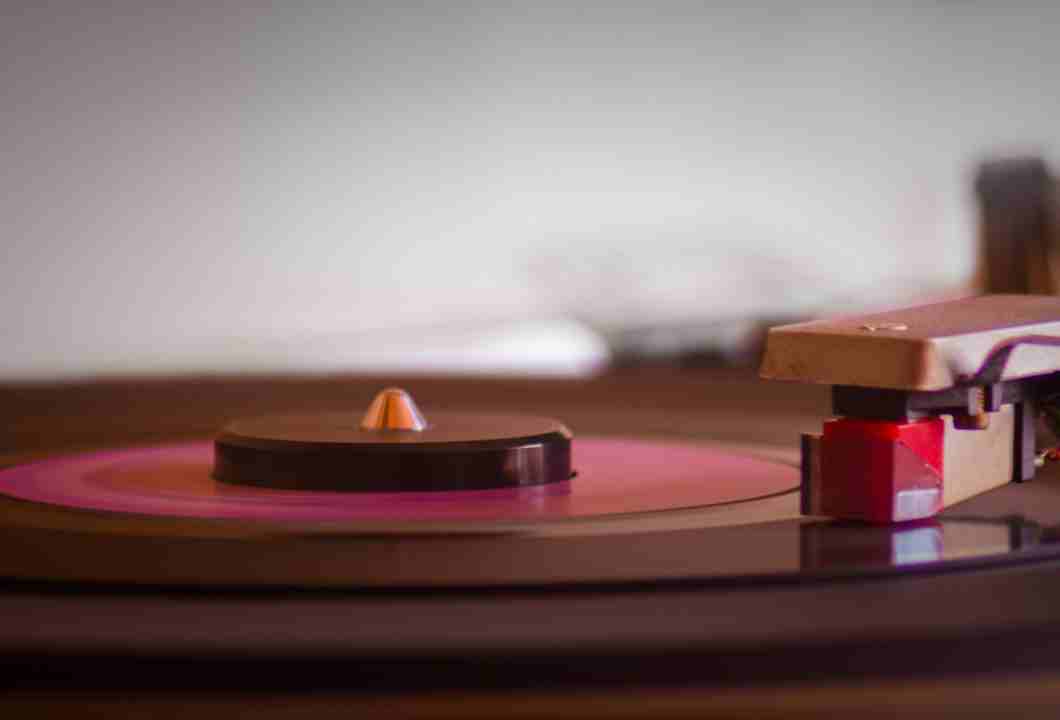
Living in an apartment with floating floors can feel like the ideal balance between comfort and modern design — until a carefully restored turntable starts reacting to every footstep as if it were measuring tectonic activity. For enthusiasts of vintage audio, this situation is frustratingly common.
The issue is rarely the turntable itself, nor the cartridge, nor even the speakers. More often, it is the building beneath your feet, quietly undermining stable vinyl playback through structural movement that was never part of the original design assumptions behind classic audio equipment.
Why Floating Floors and Turntables Clash
Floating floors are engineered to reduce impact noise and allow controlled movement. They are not rigidly bonded to the concrete slab. Instead, they rest on underlay materials such as foam, rubber, or cork, creating a mechanically compliant surface.
From an architectural perspective, this is effective. From an analog playback perspective, it is problematic.
A turntable is a precision instrument. Its function depends on maintaining a stable geometric relationship between platter, bearing, tonearm, and stylus. Low-frequency vibration introduced through the support surface can travel upward through the plinth and into the cartridge, where it is interpreted as signal.
What the listener perceives as:
- Low-frequency rumble
- Acoustic feedback
- Skipping triggered by footsteps
- Unstable or “woolly” bass
is often the stylus responding to floor-borne vibration rather than groove modulation.
In severe cases, the turntable becomes a mechanical amplifier of structural movement — hence the seismograph analogy.
Understanding the Vibration Path
Effective solutions begin with understanding how vibration travels.
Footsteps, chair movement, or nearby traffic inject energy into the building structure. The floating floor system compresses and rebounds, allowing both vertical and lateral motion. Furniture resting on that surface moves with it, carrying the turntable along.
From there, vibration passes through the feet or spikes, into the plinth, and finally reaches the stylus. The cartridge has no way to distinguish unwanted motion from musical information.
Once this chain is clear, diagnosis becomes far more precise.
Diagnosing the Problem Correctly
Many owners initially blame the turntable and begin replacing cartridges, mats, or isolation accessories. A proper diagnosis follows a different logic.
With the turntable spinning and the stylus resting on a stationary record, walk slowly around the room. If footsteps cause visible tonearm movement or audible noise, the issue is structural vibration.
Next, lower the listening volume or mute the amplifier entirely. If the problem persists without sound output, acoustic feedback can be ruled out — confirming mechanical transmission rather than speaker interaction, a distinction also explored in Skipping Records: How to Tell Tonearm Adjustment from a Warped Disc.
A simple support test can be revealing. Place a glass of water on the same surface as the turntable and walk nearby. Visible ripples indicate that the support itself is moving.
Finally, temporarily relocate the turntable to a wall-mounted shelf or directly onto a structural element, if available. If the problem disappears, the diagnosis is confirmed.
This methodical approach prevents unnecessary modifications and preserves original components — a core principle in vintage audio restoration.
Common Myths That Make Things Worse
One common belief is that heavier turntables solve vibration problems automatically. Mass helps only when properly decoupled. A heavy turntable placed on a moving surface still moves.
Another misconception is that spikes are always beneficial. Spikes couple energy. On floating floors, they often transmit vibration more efficiently into the chassis.
Soft feet are also frequently misunderstood. While they may feel isolating, poorly chosen compliance can lower resonance into the cartridge’s sensitive range, worsening the problem rather than solving it.
Isolation must be deliberate, not intuitive.
Structural Solutions That Actually Work
Wall-Mounted Shelves
Mounting a shelf directly to a load-bearing wall bypasses the floating floor entirely. This remains the most effective solution in apartments.
Success depends on using structural walls rather than drywall partitions, employing rigid brackets with minimal flex, and leveling the shelf precisely. This approach is widely used in urban studios facing similar challenges.
Mass and Decoupling Platforms
When wall mounting is not possible, a properly designed isolation platform becomes the next best option.
A proven strategy combines a high-mass slab — stone, concrete, or laminated hardwood — with a compliant isolation layer tuned to low-frequency movement. The interface between slab and turntable should remain rigid.
The objective is not softness, but controlled resonance below the stylus’s operating range.
Rethinking Furniture
Lightweight audio racks often perform poorly on floating floors. Heavier wooden furniture with broad contact surfaces tends to behave more predictably, especially when combined with isolation at the correct interface.
Hollow metal frames, tall narrow stands, and uneven floor contact frequently amplify problems rather than reduce them.
Turntable Design Matters More Than Brand
Different turntable architectures respond differently to floor movement.
Suspended subchassis designs can isolate effectively when correctly tuned, but may oscillate excessively if their resonance interacts poorly with floor movement.
Rigid plinth designs rely almost entirely on external isolation. Without it, vibration is transmitted directly to the stylus.
Drive type — idler, belt, or direct drive — is less important than how mechanical grounding and isolation are implemented, a theme also discussed in “Vintage Sound” Without the Myth: How to Set a Turntable to Sound Musical Without Losing Detail.
Understanding the design philosophy of the turntable is essential before applying any solution.
Cartridge and Tonearm Considerations
While not the root cause, cartridge compliance and tonearm mass influence how vibration manifests.
High-compliance cartridges tend to be more sensitive to low-frequency movement. Incorrect arm resonance can exaggerate floor-induced issues. Worn suspension components or incorrect tracking force further compound the problem, reinforcing the importance of correct setup as outlined in Tracking Force and Anti-Skate: How to Choose Safe Values for Your Cartridge.
A clinical approach always evaluates mechanical health before chasing accessories.
Turntable vs. Record Player: Why the Distinction Matters
In casual language, “record player” and “turntable” are often used interchangeably. Technically, the distinction matters.
A turntable is a component designed for integration into a high-fidelity system, with adjustable parameters and serviceable parts. A record player typically refers to an all-in-one appliance with limited adjustment and isolation capability.
This difference explains why environmental control is critical in serious analog setups — especially in structurally challenging apartments.
When Restoration Meets Architecture
Vintage audio restoration is often viewed as an exercise in electronics and mechanics. In reality, it frequently intersects with architecture, physics, and human behavior.
Floating floors simply make these interactions impossible to ignore.
A properly restored turntable deserves an environment that allows it to perform as intended. When structural challenges are addressed with the same care as bearing lubrication or capacitor replacement, vinyl playback regains stability, depth, and emotional impact.
The moment when the stylus tracks silently, immune to footsteps and movement, is deeply satisfying. It is proof that analog precision can coexist with modern living spaces — when respect for physics guides every decision.