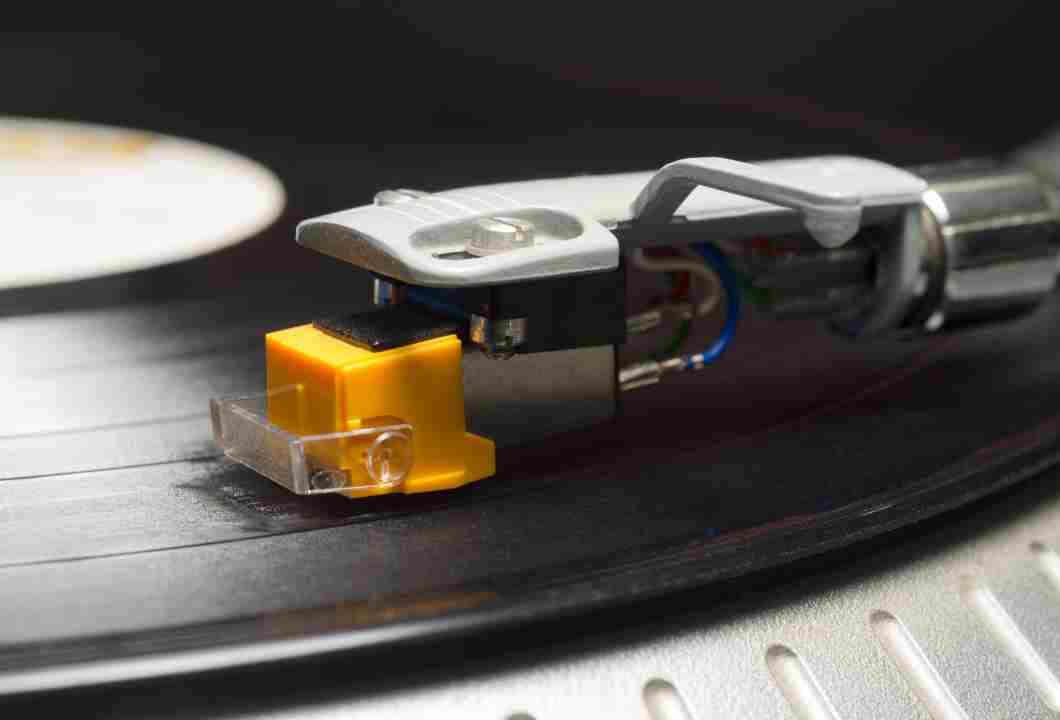

One of the most common questions among vinyl enthusiasts is whether a modern cartridge can improve the performance of a vintage turntable.
The short answer is yes—but only if the cartridge and tonearm are mechanically compatible.
Many classic turntables were built to an exceptionally high standard, with precision bearings, solid tonearms, and engineering that has stood the test of time. At the same time, modern cartridges benefit from advances in stylus profiles, suspension materials, and manufacturing consistency.
Combining these two worlds can produce outstanding results.
It can also create tracking problems, distorted sound, excessive resonance, or unnecessary record wear if compatibility is overlooked.
The key is understanding that a cartridge should never be chosen based only on reviews or popularity. It must work as part of the entire tonearm system.
Quick Answer
A modern cartridge can work beautifully on a vintage tonearm if:
- compliance matches the tonearm’s effective mass;
- tracking force is appropriate;
- the tonearm bearings are in good condition;
- the cartridge is correctly aligned;
- the phono stage is electrically compatible.
Ignoring these factors often leads to poor tracking, excessive resonance, and disappointing sound—even with an excellent cartridge.
Why Compatibility Matters
A cartridge does not play records by itself.
It becomes part of a mechanical system that includes:
- the tonearm;
- the headshell;
- mounting hardware;
- counterweight;
- bearings;
- stylus suspension.
All of these components move together while the stylus traces the groove.
If they work in harmony, playback feels effortless.
If they do not, the stylus spends more time fighting the mechanics than following the music.
This is why simply installing a more expensive cartridge does not automatically improve a vintage turntable.
The Most Important Factor: Effective Mass
One of the first specifications to consider is effective mass.
Effective mass is not simply how heavy the tonearm feels in your hand.
Instead, it describes how much moving mass the cartridge suspension must control during playback.
Many vintage tonearms—particularly those built between the 1960s and early 1980s—have medium or relatively high effective mass.
Examples include:
- classic S-shaped tonearms;
- broadcast-style arms;
- heavier detachable-headshell designs;
- many Japanese direct-drive turntables.
These arms were often designed around cartridges that used suspension characteristics very different from many modern designs.
Understanding Cartridge Compliance
Compliance describes how easily the stylus suspension moves.
Think of it as the flexibility of the cartridge suspension.
Generally speaking:
High-compliance cartridges
- move very easily;
- prefer lighter tonearms;
- often track at lower forces.
Low-compliance cartridges
- have stiffer suspensions;
- require more control;
- usually perform better in heavier tonearms.
Many cartridges advertised today as “medium compliance” actually behave differently once installed on older equipment.
The published specification is useful, but it does not always tell the whole story.
Age, suspension materials, manufacturing differences, and the condition of the tonearm all influence real-world performance.
Why Modern Cartridges Often Perform Better Than Expected
When the mechanical match is correct, a modern cartridge can transform a vintage turntable.
Improvements may include:
- cleaner tracking;
- lower distortion;
- improved channel separation;
- better detail retrieval;
- lower surface noise;
- greater consistency between records.
This is especially noticeable when replacing an aging cartridge whose suspension has hardened over time.
Modern manufacturing also tends to provide tighter quality control than many inexpensive cartridges produced decades ago.
Advanced Stylus Profiles Can Reveal More Information
Many current cartridges are available with stylus profiles such as:
- MicroLine;
- Shibata;
- Fine Line;
- Line Contact.
Compared with traditional conical or elliptical styli, these designs contact the groove differently.
Potential benefits include:
- improved high-frequency detail;
- reduced tracing distortion;
- cleaner inner-groove performance;
- lower groove pressure when properly adjusted.
However, these profiles are also less forgiving.
To perform at their best they require:
- accurate alignment;
- correct tracking force;
- stable anti-skate;
- healthy tonearm bearings.
Installing an advanced stylus without careful setup rarely produces the improvement people expect.
Why Vintage Tonearms Can Be Surprisingly Good
Many older tonearms were engineered with remarkable mechanical quality.
Features commonly found on well-built vintage models include:
- rigid arm tubes;
- precision bearings;
- detachable headshells;
- solid counterweight systems;
- durable construction.
When these components remain in good condition, they can provide an excellent platform for modern cartridges.
Age alone does not make a tonearm obsolete.
Condition is far more important than manufacturing date.
Where Compatibility Problems Begin
Most disappointing cartridge upgrades are not caused by poor cartridges.
They result from mechanical mismatch.
The most common causes include:
- incorrect compliance;
- excessive or insufficient effective mass;
- worn bearings;
- poor cartridge alignment;
- incorrect tracking force;
- unsuitable headshell weight.
These issues are predictable and usually preventable.
Resonance: The Hidden Problem
Every cartridge and tonearm combination creates a natural resonance frequency.
Ideally, this resonance should remain approximately between 8 Hz and 12 Hz.
Within this range:
- record warps are less problematic;
- bass remains controlled;
- tracking stays stable;
- footfall sensitivity is reduced.
If resonance falls below this range, you may notice:
- woofer pumping;
- unstable bass;
- increased sensitivity to vibration;
- poor tracking on warped records.
If resonance is too high, the system may sound:
- bright;
- nervous;
- thin;
- more sensitive to surface noise.
Many listeners blame the cartridge when the real problem is simply poor mechanical matching.
Tracking Force Still Matters
Even a perfectly matched cartridge cannot perform well with incorrect tracking force.
Some modern cartridges are designed to track at relatively low values.
However, certain vintage tonearms perform more consistently with slightly higher tracking force—as long as it remains within the cartridge manufacturer’s recommended range.
Never increase tracking force beyond specification simply to solve a compatibility problem.
If additional force appears necessary, it usually indicates another issue that deserves attention.
Modern Cartridges on Vintage Tonearms: When They Work, When They Don’t, and Why
One of the most common questions among vinyl enthusiasts is whether a modern cartridge can improve the performance of a vintage turntable.
The short answer is yes—but only if the cartridge and tonearm are mechanically compatible.
Many classic turntables were built to an exceptionally high standard, with precision bearings, solid tonearms, and engineering that has stood the test of time. At the same time, modern cartridges benefit from advances in stylus profiles, suspension materials, and manufacturing consistency.
Combining these two worlds can produce outstanding results.
It can also create tracking problems, distorted sound, excessive resonance, or unnecessary record wear if compatibility is overlooked.
The key is understanding that a cartridge should never be chosen based only on reviews or popularity. It must work as part of the entire tonearm system.
Quick Answer
A modern cartridge can work beautifully on a vintage tonearm if:
- compliance matches the tonearm’s effective mass;
- tracking force is appropriate;
- the tonearm bearings are in good condition;
- the cartridge is correctly aligned;
- the phono stage is electrically compatible.
Ignoring these factors often leads to poor tracking, excessive resonance, and disappointing sound—even with an excellent cartridge.
Why Compatibility Matters
A cartridge does not play records by itself.
It becomes part of a mechanical system that includes:
- the tonearm;
- the headshell;
- mounting hardware;
- counterweight;
- bearings;
- stylus suspension.
All of these components move together while the stylus traces the groove.
If they work in harmony, playback feels effortless.
If they do not, the stylus spends more time fighting the mechanics than following the music.
This is why simply installing a more expensive cartridge does not automatically improve a vintage turntable.
The Most Important Factor: Effective Mass
One of the first specifications to consider is effective mass.
Effective mass is not simply how heavy the tonearm feels in your hand.
Instead, it describes how much moving mass the cartridge suspension must control during playback.
Many vintage tonearms—particularly those built between the 1960s and early 1980s—have medium or relatively high effective mass.
Examples include:
- classic S-shaped tonearms;
- broadcast-style arms;
- heavier detachable-headshell designs;
- many Japanese direct-drive turntables.
These arms were often designed around cartridges that used suspension characteristics very different from many modern designs.
Understanding Cartridge Compliance
Compliance describes how easily the stylus suspension moves.
Think of it as the flexibility of the cartridge suspension.
Generally speaking:
High-compliance cartridges
- move very easily;
- prefer lighter tonearms;
- often track at lower forces.
Low-compliance cartridges
- have stiffer suspensions;
- require more control;
- usually perform better in heavier tonearms.
Many cartridges advertised today as “medium compliance” actually behave differently once installed on older equipment.
The published specification is useful, but it does not always tell the whole story.
Age, suspension materials, manufacturing differences, and the condition of the tonearm all influence real-world performance.
Why Modern Cartridges Often Perform Better Than Expected
When the mechanical match is correct, a modern cartridge can transform a vintage turntable.
Improvements may include:
- cleaner tracking;
- lower distortion;
- improved channel separation;
- better detail retrieval;
- lower surface noise;
- greater consistency between records.
This is especially noticeable when replacing an aging cartridge whose suspension has hardened over time.
Modern manufacturing also tends to provide tighter quality control than many inexpensive cartridges produced decades ago.
Advanced Stylus Profiles Can Reveal More Information
Many current cartridges are available with stylus profiles such as:
- MicroLine;
- Shibata;
- Fine Line;
- Line Contact.
Compared with traditional conical or elliptical styli, these designs contact the groove differently.
Potential benefits include:
- improved high-frequency detail;
- reduced tracing distortion;
- cleaner inner-groove performance;
- lower groove pressure when properly adjusted.
However, these profiles are also less forgiving.
To perform at their best they require:
- accurate alignment;
- correct tracking force;
- stable anti-skate;
- healthy tonearm bearings.
Installing an advanced stylus without careful setup rarely produces the improvement people expect.
Why Vintage Tonearms Can Be Surprisingly Good
Many older tonearms were engineered with remarkable mechanical quality.
Features commonly found on well-built vintage models include:
- rigid arm tubes;
- precision bearings;
- detachable headshells;
- solid counterweight systems;
- durable construction.
When these components remain in good condition, they can provide an excellent platform for modern cartridges.
Age alone does not make a tonearm obsolete.
Condition is far more important than manufacturing date.
Where Compatibility Problems Begin
Most disappointing cartridge upgrades are not caused by poor cartridges.
They result from mechanical mismatch.
The most common causes include:
- incorrect compliance;
- excessive or insufficient effective mass;
- worn bearings;
- poor cartridge alignment;
- incorrect tracking force;
- unsuitable headshell weight.
These issues are predictable and usually preventable.
Resonance: The Hidden Problem
Every cartridge and tonearm combination creates a natural resonance frequency.
Ideally, this resonance should remain approximately between 8 Hz and 12 Hz.
Within this range:
- record warps are less problematic;
- bass remains controlled;
- tracking stays stable;
- footfall sensitivity is reduced.
If resonance falls below this range, you may notice:
- woofer pumping;
- unstable bass;
- increased sensitivity to vibration;
- poor tracking on warped records.
If resonance is too high, the system may sound:
- bright;
- nervous;
- thin;
- more sensitive to surface noise.
Many listeners blame the cartridge when the real problem is simply poor mechanical matching.
Tracking Force Still Matters
Even a perfectly matched cartridge cannot perform well with incorrect tracking force.
Some modern cartridges are designed to track at relatively low values.
However, certain vintage tonearms perform more consistently with slightly higher tracking force—as long as it remains within the cartridge manufacturer’s recommended range.
Never increase tracking force beyond specification simply to solve a compatibility problem.
If additional force appears necessary, it usually indicates another issue that deserves attention.
Headshell Choice Matters More Than Many People Realize
When people upgrade a cartridge, they rarely think about the headshell.
However, the headshell is part of the tonearm’s moving mass, which means it directly affects the mechanical behavior of the entire cartridge-and-tonearm system.
Changing the headshell can alter:
- effective mass;
- resonance frequency;
- balance;
- tracking stability.
Sometimes a cartridge that seems incompatible with a vintage tonearm performs much better simply because the headshell weight has been changed.
Heavy vs. Light Headshells
There is no universally “better” headshell.
The correct choice depends on the cartridge and tonearm working together.
A Heavier Headshell
A heavier headshell increases the effective mass of the tonearm.
It may work well with:
- lower-compliance cartridges;
- some moving coil cartridges;
- heavier vintage tonearms.
However, too much mass can move the resonance frequency too low and reduce tracking stability.
A Lighter Headshell
A lighter headshell reduces effective mass.
It is often a better choice for:
- higher-compliance cartridges;
- lighter tonearms;
- cartridges designed to track at lower forces.
The goal is balance—not simply choosing the lightest or heaviest option available.
Cartridge Alignment Still Matters
Mechanical compatibility alone is not enough.
Even a perfectly matched cartridge will underperform if it is poorly aligned.
Correct alignment helps the stylus follow the groove with the least possible tracking error.
Benefits include:
- lower distortion;
- improved channel balance;
- better inner-groove performance;
- reduced stylus wear;
- reduced record wear.
Always complete the alignment before deciding whether a cartridge is a good match for a vintage tonearm.
Tonearm Condition Is Just As Important
Compatibility calculations assume the tonearm is functioning correctly.
Unfortunately, many vintage turntables have spent decades in storage or have never been properly serviced.
Before blaming the cartridge, inspect the tonearm for:
- bearing play;
- excessive friction;
- damaged wiring;
- loose headshell contacts;
- worn cueing mechanisms;
- unstable counterweights.
A cartridge cannot compensate for mechanical problems elsewhere in the system.
How to Tell When a Cartridge Is Not a Good Match
Compatibility problems often reveal themselves through predictable symptoms.
Watch for:
- poor bass control;
- excessive sensitivity to footsteps;
- visible woofer pumping;
- persistent mistracking;
- distortion near the inner grooves;
- exaggerated surface noise;
- unstable stereo image;
- difficulty setting anti-skate correctly.
One symptom alone does not prove incompatibility.
However, several appearing together deserve a closer look.
A Practical Compatibility Checklist
Before purchasing a modern cartridge for a vintage turntable, ask yourself:
✓ Is the tonearm in good mechanical condition?
✓ What is the approximate effective mass of the tonearm?
✓ Is the cartridge compliance appropriate?
✓ Is the recommended tracking force compatible with the tonearm?
✓ Is the phono stage suitable for the cartridge?
✓ Will the existing headshell produce a reasonable overall mass?
✓ Can the cartridge be aligned correctly?
If most of these questions cannot be answered confidently, research before purchasing is almost always worthwhile.
Common Mistakes
Many disappointing upgrades come from the same assumptions.
Avoid these common errors:
- buying a cartridge based only on online reviews;
- assuming a more expensive cartridge always sounds better;
- ignoring compliance specifications;
- forgetting that the headshell affects effective mass;
- changing several variables at once;
- blaming the cartridge before checking the tonearm.
Successful upgrades are usually planned—not accidental.
Frequently Asked Questions
Can I install any modern cartridge on a vintage turntable?
Physically, many cartridges will fit.
Mechanically, not all of them will perform well.
Compatibility depends on the relationship between the cartridge, tonearm, headshell, and phono stage.
Are vintage tonearms outdated?
Not at all.
Many vintage tonearms remain exceptionally well engineered and can perform at a very high level when properly serviced.
Condition matters far more than age.
Do moving coil cartridges work on vintage tonearms?
Many do.
Low- and medium-compliance moving coil cartridges often perform extremely well on medium- or high-mass vintage tonearms, provided the phono stage offers the correct gain and loading.
Is a more advanced stylus profile always better?
No.
MicroLine, Shibata, and other advanced profiles can deliver outstanding results, but only if alignment, tracking force, and tonearm compatibility are correct.
Otherwise, a well-installed elliptical stylus often produces better overall performance.
Final Thoughts
Installing a modern cartridge on a vintage tonearm is not about combining old and new for its own sake.
It is about respecting the engineering principles that allow both components to work together.
A well-matched combination delivers cleaner tracking, lower distortion, better stereo imaging, and a more natural presentation than either component could achieve alone.
A poorly matched combination, on the other hand, often creates problems that are mistakenly blamed on the cartridge, the stylus, or even the records themselves.
The best upgrades are rarely the most expensive.
They are the ones that respect mechanical compatibility.
When the cartridge, tonearm, headshell, and phono stage work as a single system, a vintage turntable can compete surprisingly well with many modern designs—and continue delivering outstanding analog sound for years to come.
Continue Learning
If you’re choosing or upgrading a cartridge, these guides are the next logical step:
- Tracking Force and Anti-Skate: How to Choose Safe Values for Your Cartridge
- How to Identify the Correct Turntable Stylus in 10 Minutes
- MM vs. MC Cartridges in Vintage Turntables: When It Makes Sense—and When It’s a Waste
- Headshell and Mounting Standards: Compatibility Explained
- Upgrades That Seem Obvious but Worsen the Result: Common Compatibility Mistakes
Together, these guides will help you build a cartridge and tonearm combination that delivers reliable performance while protecting both your equipment and your record collection.