
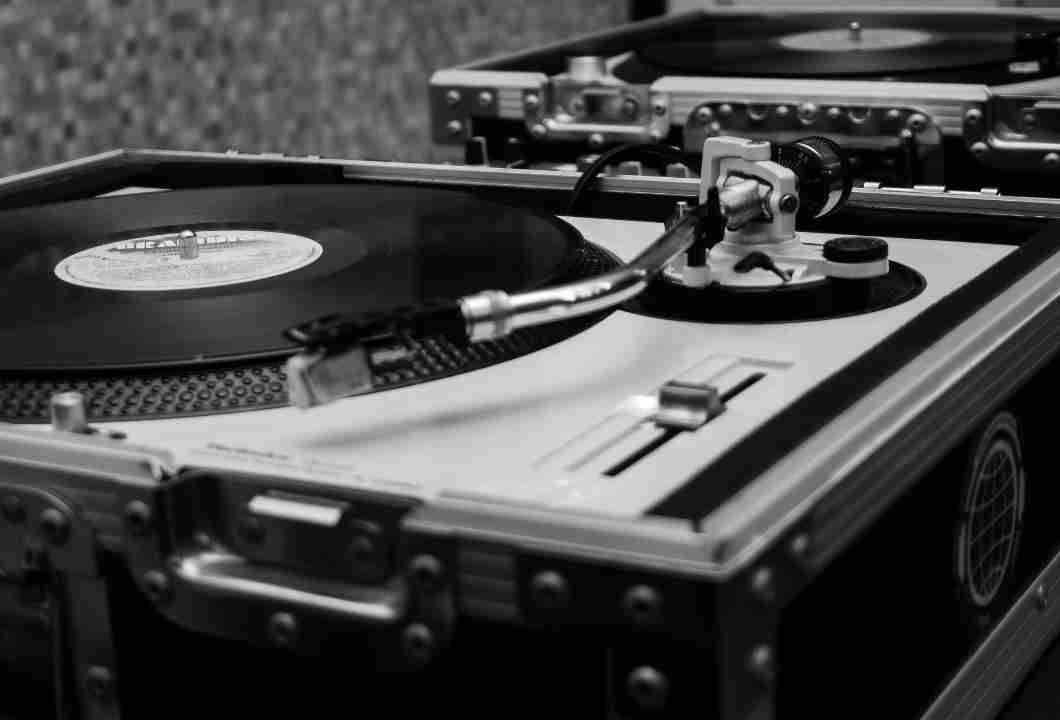
Restoring and optimizing a vintage turntable is as much about restraint as it is about ambition. In a world full of exotic accessories, boutique materials, and bold marketing claims, it is easy to spend heavily while achieving little—or nothing—audible. In a clinical approach to turntable diagnosis and solution, every upgrade must justify itself through measurable improvement, audible benefit, and system compatibility.
Understanding “Return” in Turntable Upgrades
Before touching a screwdriver or ordering parts, it is essential to define what “return” means in analog playback.
A meaningful upgrade must do at least one of the following:
- Reduce mechanical or electrical noise
- Improve tracking accuracy
- Preserve signal integrity
- Increase speed stability
- Improve resonance control in an audible frequency range
If an upgrade does not affect one of these domains, it may still be satisfying, but it is not a priority in a restoration-focused workflow. This distinction explains why many systems show symptoms later analyzed in Upgrades That Seem Obvious but Worsen the Result: Common Compatibility Mistakes.
Priority 1: Cartridge and Stylus Condition
Why this matters most
The cartridge is the only component physically reading the groove. No other upgrade can compensate for a worn stylus, misaligned cantilever, or inappropriate compliance.
A degraded stylus does not merely sound dull—it permanently damages records. From a diagnostic standpoint, this is always the first checkpoint, as detailed in Elliptical, Conical, or Microlinear Stylus: Audible Differences and Risks for Vintage Records.
What truly improves sound
- Replacing a worn stylus with a new, correctly profiled one
- Moving from basic conical to elliptical, then to line-contact profiles
- Matching cartridge compliance to tonearm effective mass
Step-by-step diagnostic approach
- Inspect stylus wear under magnification
- Verify cartridge hours (if unknown, assume worst-case)
- Confirm compliance compatibility with the tonearm
- Align using proven geometry
This remains the highest return-per-dollar upgrade in any turntable system.
Priority 2: Precision Setup and Calibration
The upgrade many people skip
Perfect hardware installed incorrectly performs worse than modest hardware set correctly. Setup is not an accessory—it is a fundamental upgrade.
Parameters that affect sound immediately
- Vertical Tracking Force (VTF)
- Vertical Tracking Angle (VTA)
- Azimuth
- Anti-skate
- Overhang and offset angle
Proper setup workflow
- Level the chassis and platter
- Set VTF with a calibrated scale
- Align cartridge accurately
- Set azimuth so the stylus sits perfectly vertical
- Fine-tune anti-skate by observation and test records
Correct setup often resolves issues later blamed on hardware, such as those described in Muddy Bass and Dull Mids: How to Tell Whether the Problem Is a Tired Cartridge or a Bad Adjustment.
Priority 3: Bearing Health and Lubrication
Silent rotation equals audible purity
The platter bearing is a critical mechanical interface. Dry bearings and contaminated oil introduce micro-vibrations directly into playback.
Diagnostic indicators
- Audible rumble
- Reduced spin-down time
- Vertical or lateral platter play
Restoration solution
- Complete bearing cleaning
- Inspection for wear
- Correct lubricant selection
- Thrust plate service if required
This removes mechanical interference often misinterpreted as groove noise or cartridge limitations.
Priority 4: Power Supply Stability
Speed stability is pitch accuracy
A turntable that cannot maintain speed cannot reproduce music faithfully.
Where improvements are real
- Rebuilding aging power supplies
- Replacing out-of-spec capacitors
- Correctly designed external supplies
Many instability complaints ultimately trace back to issues outlined in Wow & Flutter “Perceptible”: Why It Happens and How to Confirm It Without Expensive Equipment or Unstable 33/45 Speed: Belt, Pulley, or Motor? A Symptom Checklist.
Priority 5: Tonearm Wiring and Signal Path Integrity
Small voltages demand respect
Phono signals are extremely low-level. Any oxidation or poor solder joint has an outsized effect.
Real improvements include
- Replacing degraded internal tonearm wiring
- Correcting cable capacitance
- Ensuring proper grounding topology
This aligns closely with findings in Cabling: When Replacing Cables Helps — and When It’s Placebo and Impedance and Capacitance Explained Without Formulas: How This Changes the Real Sound of Vinyl.
Priority 6: Plinth Integrity and Structural Damping
Resonance control, not mass accumulation
A plinth must manage vibration, not simply weigh more.
Effective improvements
- Repairing loose joints
- Constrained-layer damping
- Proper motor and tonearm mounting
These changes reduce midrange coloration and improve image stability—often confused with cartridge “character.”
Priority 7: Isolation from External Vibration
Environment matters
Footfalls, feedback, and airborne vibration all reach the stylus unless controlled.
High-return solutions
- Wall-mounted shelves
- Proper isolation feet
- Correct room placement
This is especially critical in apartments, as discussed in Floating Floors in Apartments: How to Keep Your Turntable from Becoming a Seismograph.
Low-Priority Upgrades with Minimal Audible Return
In a clinical context, these typically rank low:
- Heavy record weights on bearing-limited decks
- Exotic mats that mismatch platter impedance
- Decorative clamps used to mask warps
- Boutique accessories without diagnostic justification
They may come later—but never first.
Record Player vs. Turntable: Why the Distinction Matters
A record player implies convenience and integration. A turntable is a precision instrument designed for calibration and long-term service. Treating one like the other leads to misguided upgrade paths.
Building a Logical Upgrade Path
The most successful restorations follow a strict sequence:
- Restore mechanical health
- Ensure electrical stability
- Optimize signal extraction
- Control vibration
- Refine—never compensate
Skipping steps leads to symptom chasing instead of diagnosis.
When Upgrades Become Education
Every upgrade with real return teaches how analog playback actually works. A properly restored turntable does not draw attention to itself—it disappears.
The reward is not owning more parts, but reaching the point where nothing feels missing. When each element performs its role without interference, the system stops being equipment and becomes an instrument—faithful, stable, and deeply musical.