
How to Avoid Counterfeit Styli and Cartridges: Practical Signs When Buying
In the world of vintage audio restoration, few components generate as much confusion—and as many costly mistakes—as the stylus and cartridge. For the serious turntable owner, these tiny parts are not accessories; they are the primary interface between the groove and the sound. A counterfeit stylus or cartridge can quietly sabotage a restoration project, degrade performance, and in extreme cases cause irreversible damage to irreplaceable records—damage that often first appears as unexplained distortion, mistracking, or tonal collapse similar to the symptoms analyzed in Muddy Bass and Dull Mids: How to Tell Whether the Problem Is a Tired Cartridge or a Bad Adjustment.
Understanding how to identify authentic components is therefore not a buying tip, but a core diagnostic skill in any turntable-focused workshop.
Why Counterfeits Are So Common in the Turntable Market
The renewed demand for vinyl has created a parallel economy where availability no longer matches interest. Discontinued models, legacy cartridges, and iconic stylus profiles are especially vulnerable. Counterfeiters exploit three structural weaknesses:
- Miniaturization: Stylus assemblies are too small for casual inspection
- Knowledge gaps: Many listeners recognize sound problems but not construction flaws
- Price anchoring: Discounts that feel plausible avoid triggering skepticism
In restoration practice, this is particularly dangerous because original-spec compliance matters. A fake stylus may physically fit yet behave incorrectly, leading to accelerated groove wear that later gets misdiagnosed as alignment error or cartridge fatigue—issues often confused with problems discussed in Inner Groove Distortion at the End of the Side: Causes and How to Reduce It.
Understanding What Is Commonly Faked
Before identifying counterfeits, it helps to know where the risk concentrates.
High-Risk Stylus Types
- Elliptical and nude elliptical styli
- Line-contact profiles (MicroLine, Shibata, SAS)
- Replacement styli for discontinued cartridges
As explained in Elliptical, Conical, or Microlinear Stylus: Audible Differences and Risks for Vintage Records, these profiles demand extremely tight manufacturing tolerances. Counterfeits rarely meet them.
Frequently Counterfeited Cartridge Categories
- Classic moving magnet designs
- Entry-to-mid level cartridges with strong reputation
- Models commonly recommended as “safe upgrades”
Counterfeits are rarely exact clones. They are functional approximations, designed to pass casual listening while silently introducing long-term damage.
Packaging Tells a Story—If You Know How to Read It
Original manufacturers are remarkably consistent in packaging. While packaging alone never proves authenticity, inconsistencies often expose fakes early.
Practical Packaging Indicators
- Print quality: sharp fonts, accurate colors, no spelling drift
- Seals and markings: missing or poorly applied holograms are red flags
- Documentation: alignment notes, inspection cards, or compliance inserts
Be cautious with “bulk packaging” claims unless the seller is a known service specialist. Many counterfeits rely on vague explanations rather than traceable provenance.
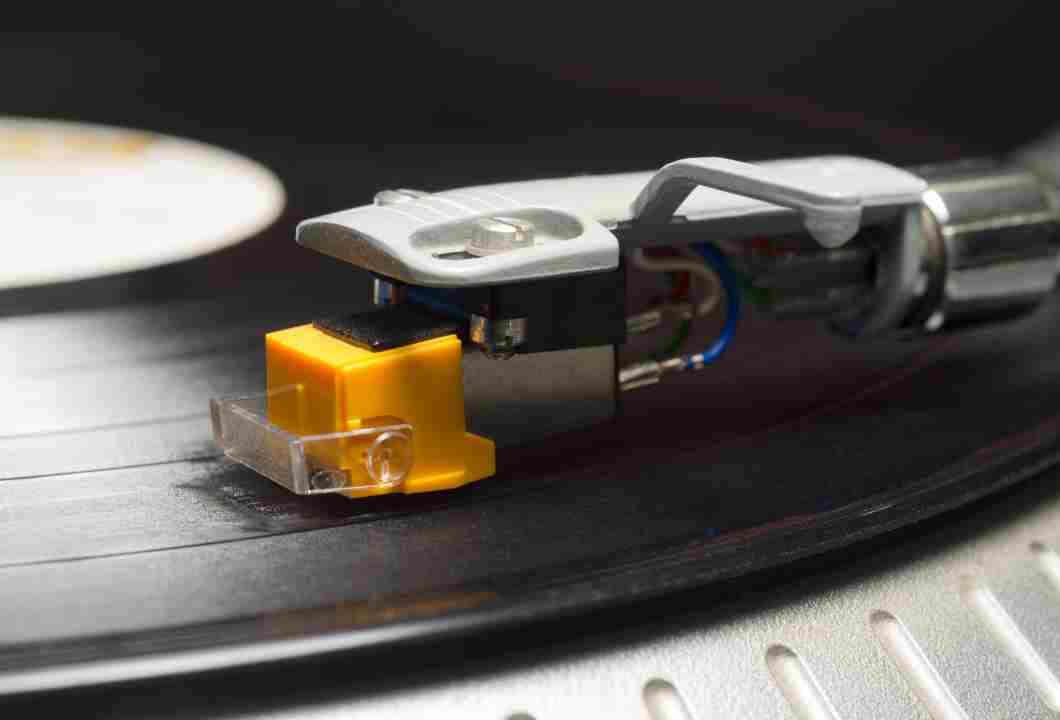
Visual Inspection of the Stylus Assembly
In any clinical turntable environment, magnification is non-negotiable.
What to Examine Step by Step
Cantilever construction
Authentic cantilevers show uniform diameter and precise mounting. Substituted materials or sloppy bonding often explain unstable tracking force behavior later mistaken for setup error, as outlined in Tracking Force and Anti-Skate: How to Choose Safe Values for Your Cartridge.
Stylus tip geometry
True line-contact styli show crisp, symmetrical edges. Rounded or uneven shapes indicate misrepresentation.
Bonding quality
Excess adhesive or visible misalignment is a classic counterfeit signature.
Suspension behavior
Authentic suspensions return smoothly to center. Erratic stiffness often correlates with harsh sound or premature wear.
This inspection alone eliminates a large percentage of fraudulent products.
Electrical and Mechanical Mismatch in Cartridges
Cartridge authenticity cannot be verified visually alone.
Diagnostic Checks in a Workshop Setting
- DC resistance measurement compared to manufacturer values
- Channel balance verification, where counterfeits often fail
- Pin quality inspection, as authentic cartridges use precision-finished contacts
A cartridge that “plays music” is not necessarily correct. This distinction becomes obvious once impedance and loading are evaluated, as explained in Impedance and Capacitance Explained Without Formulas: How This Changes the Real Sound of Vinyl.
Price Analysis: When Cheap Becomes Expensive
Counterfeits rarely aim to look suspiciously cheap.
Practical Pricing Rules
- Discounts above 30–40% on current-production styli are suspect
- “New old stock” claims require verifiable origin
- Bundled accessories often distract from questionable core components
From a preservation standpoint, replacing a genuine stylus is trivial compared to repairing groove damage caused by a fake—damage that no cleaning routine can reverse, regardless of how careful the process described in Vinyl Cleaning Without Excess: A Routine That Preserves and Prevents Wear may be.
Seller Behavior as a Diagnostic Tool
In restoration practice, seller behavior often reveals more than the product listing.
Reliable Sellers Usually
- Provide real, high-resolution photos
- Answer technical questions consistently
- Accept returns after inspection
High-Risk Seller Traits
- Stock images only
- Vague compatibility language
- Urgency-based sales pressure
Specialized vintage audio sellers remain the safest sources.
Record Player vs. Turntable: Why Terminology Matters
Counterfeit sellers frequently market “universal record player needles.” This language is itself a warning sign. Precision turntable systems are never universal—a distinction reinforced in How to Identify the Correct Turntable Stylus in 10 Minutes (Without Falling for “Similar” Replacements).
Blurring this difference allows low-grade parts to masquerade as legitimate replacements.
Step-by-Step Buying Protocol for Authenticity
For restorers and serious collectors, buying should mirror diagnosis:
- Identify exact cartridge and stylus codes
- Cross-check manufacturer references
- Buy from sellers specializing in turntables
- Request real photos
- Inspect under magnification
- Measure electrical parameters
- Test only on non-critical records
This approach aligns with the broader philosophy of Compatibility and Parts (Buy the Right Ones): control first, upgrades later.
Why Authenticity Is Central to Restoration Philosophy
Restoration is not about making a turntable merely functional. It is about preserving mechanical logic, sonic balance, and long-term reliability. A counterfeit stylus undermines all three.
Even when initial sound seems acceptable, incorrect wear patterns silently accelerate record damage—damage that later appears as mysterious noise, distortion, or tracking instability often misattributed to the turntable itself.
The Sound of Confidence in Every Groove
A well-restored turntable communicates more than music. It reflects discipline, knowledge, and respect for a system that operates at microscopic tolerances. Choosing authentic styli and cartridges is not obsession—it is preventive maintenance.
In a market flooded with shortcuts, discernment becomes craftsmanship. And craftsmanship is what allows vintage analog systems to remain not just playable, but trustworthy—record after record, groove after groove.