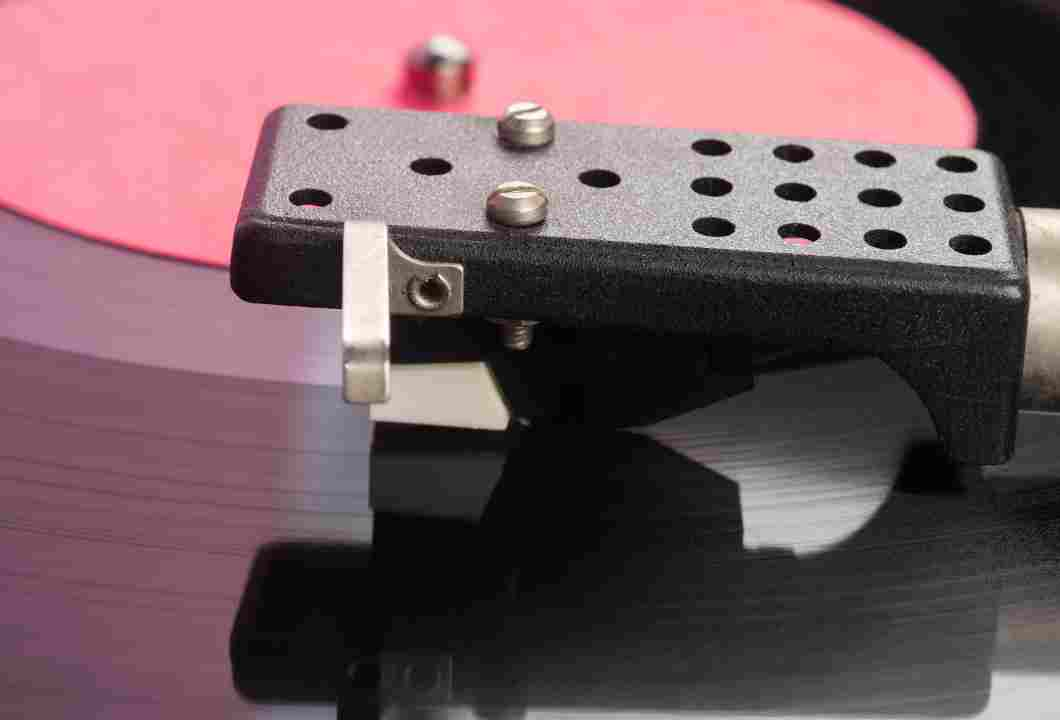

In the world of vintage audio, few devices generate as much emotional attachment as a turntable. For many owners, it represents not only a way to play records, but also a connection to a specific era of engineering, design, and listening culture. When a unit begins to fail, however, the question that truly matters is not sentimental but technical: does restoration make objective sense, or is replacement the more rational path?
This article is written from a diagnostic perspective. There is no assumption that “vintage is better,” just as there is no default push toward modern replacement. Instead, the focus is on the same criteria used in professional restoration work to decide whether a turntable deserves further investment—or whether resources are better allocated elsewhere. The goal is clarity, not romance.
What “Restoration” Actually Means in Technical Terms
Before weighing restoration against replacement, the term itself must be defined precisely.
Restoration is not basic maintenance. It goes far beyond cleaning, belt changes, or cartridge swaps. A true restoration aims to return the turntable as closely as possible to its original operating specifications, often correcting decades of mechanical and electrical drift. This can include:
- Complete mechanical disassembly
- Bearing inspection and replacement
- Motor servicing or rebuilding
- Drive system renewal (belt, idler, or control electronics)
- Electrical recap and component-level repair
- Tonearm bearing adjustment or rewiring
- Calibration to factory tolerances
Because of this scope, restoration is a structural intervention, not a cosmetic one. Whether it is justified depends entirely on the machine’s underlying viability.
The Core Diagnostic Criteria Professionals Use
Mechanical Integrity of the Chassis and Platter System
Every turntable is built on a mechanical foundation. If that foundation is compromised, no amount of tuning can recover performance.
Key diagnostic questions include:
- Is the main bearing housing intact and within tolerance?
- Does the platter rotate true, without lateral or vertical wobble?
- Is the plinth or subchassis free from cracks, warping, or deformation?
Structural failures are among the strongest indicators that replacement may be the more rational decision. Mechanical instability cannot be equalized or compensated for later in the signal chain.
Motor Condition and Drive System Quality
Motors define speed stability, noise floor, and long-term reliability. High-quality synchronous or induction motors were engineered for decades of service. Lower-grade or sealed proprietary motors were not.
A professional motor evaluation includes:
- Startup torque consistency
- Speed stability over time and temperature
- Mechanical noise and vibration
- Lubrication condition and bearing wear
Speed-related symptoms frequently overlap with those described in Unstable 33/45 Speed: Belt, Pulley, or Motor? A Symptom Checklist. If the motor cannot be serviced—or matched to a functionally equivalent replacement without altering performance—the restoration value drops sharply.
Tonearm Geometry and Bearing Condition
The tonearm is the most precision-critical component in the system. Even minor bearing wear can compromise tracking accuracy, stereo stability, and record safety.
Professionals evaluate:
- Horizontal and vertical bearing play
- Smoothness of movement under minimal force
- Anti-skate consistency
- Internal wiring integrity
If tonearm bearings are worn beyond adjustment, or if the design itself limits alignment flexibility, restoration may require invasive modification. At that point, replacement often becomes the more controlled and predictable solution.
Tonearm–cartridge interaction issues frequently intersect with Modern Cartridges on Vintage Tonearms: When It Works, When It Mismatches, and Why.
Electronics: Serviceable vs. Disposable Designs
Vintage turntables generally fall into two electronic categories.
Serviceable, discrete designs allow for:
- Capacitor replacement
- Transistor substitution
- Precise recalibration of speed control circuits
Proprietary or integrated designs, common in later consumer models, rely on custom ICs or logic boards that are no longer manufactured.
If a critical electronic component fails and no functional substitute exists, restoration becomes speculative rather than professional. That point alone often justifies replacement.
Parts Availability and Long-Term Support
Restoration is not only about solving today’s problem—it is about ensuring future serviceability.
A realistic assessment includes:
- Availability of belts, bearings, idlers, and motors
- Cartridge and stylus compatibility
- Access to service manuals and schematics
Turntables supported by an active aftermarket and strong documentation ecosystem remain viable long-term. Those without support often become stranded after the next failure, a risk explored indirectly in Spare Parts Worth Keeping on Hand to Keep Your Turntable Running (Minimal Kit).
Cost Analysis Without Emotional Bias
A common mistake is comparing restoration cost to original purchase price or sentimental value. Neither metric is relevant.
The only meaningful comparison is performance per investment.
A proper analysis considers:
- Labor hours for full mechanical and electrical work
- Parts cost, including contingencies
- Expected performance after restoration
- Cost of a modern or alternative turntable delivering equivalent performance
If restoration costs approach—or exceed—the price of a clearly superior-performing alternative, and the restored unit offers no unique technical advantage, replacement becomes the rational outcome.
This evaluation mindset aligns closely with Return-on-Investment Upgrades: What Actually Improves Turntable Sound, in Order of Priority.
How Professionals Actually Decide (Step-by-Step)
- Baseline functionality — does the unit run at all?
- Mechanical viability — bearings, platter, chassis, suspension
- Motor and drive evaluation — torque, noise, speed stability
- Tonearm precision — bearings, geometry, wiring
- Electronics diagnosis — serviceable vs proprietary failures
- Parts and documentation audit — long-term support
- Performance-to-cost comparison — outcome over attachment
This process removes emotion from the equation and replaces it with engineering reality.
When Restoration Is the Right Choice
Restoration makes sense when:
- The mechanical design is fundamentally sound
- Motors and tonearms are serviceable
- Parts and documentation are available
- Post-restoration performance can rival modern equivalents
- Longevity and serviceability are priorities
In these cases, restoration is not nostalgia—it is a technically justified investment.
When Replacement Is the Smarter Decision
Replacement is the better option when:
- Structural damage compromises stability
- Critical components are unavailable
- Restoration costs outweigh performance gains
- The original design was limited even when new
- Long-term reliability cannot be ensured
Choosing replacement in these cases is not abandoning vintage audio; it is respecting engineering limits.
A Clarifying Note on “Record Players”
The term record player is often used casually. In technical contexts, it usually refers to all-in-one systems with integrated amplification and speakers. These units were designed for convenience, not precision or serviceability, and rarely justify deep restoration. Understanding this distinction helps set realistic expectations from the start.
Making the Decision With Confidence
A turntable exists to serve the music. Restoration is powerful when applied to the right machine under the right conditions. Replacement is equally valid when diagnostics point in that direction.
The most satisfying outcomes come from decisions based on measurements, mechanics, and long-term viability—not nostalgia. When evaluation replaces emotion, vintage audio remains alive in a sustainable, meaningful way—one carefully evaluated turntable at a time.
Se quiser, no próximo passo posso:
- revisar densidade e posicionamento dos links internos
- ajustar introdução/conclusão para featured snippet
- ou alinhar este texto com schema + interlinking estratégico da categoria