
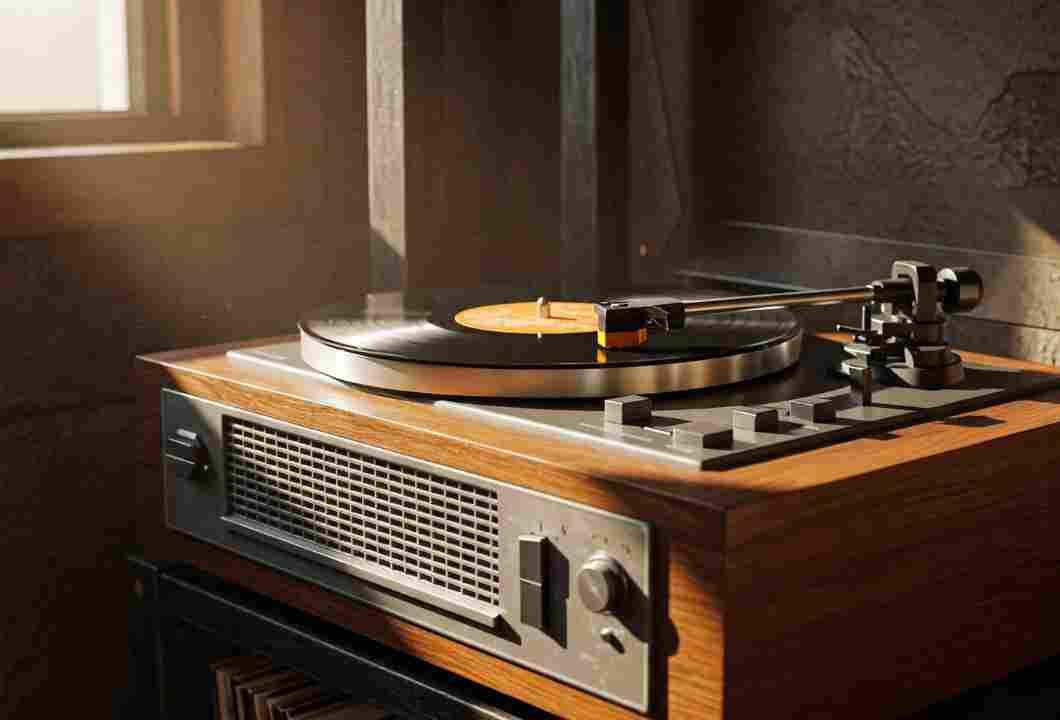
Vibration is one of the most underestimated enemies of analog playback. Many enthusiasts focus on cartridges, stylus profiles, or phono stages, while overlooking the physical environment in which the turntable operates. Yet vibration control is often the difference between a system that merely plays records and one that truly reveals what is pressed into the grooves.
In the day-to-day clinic of turntable restoration and vintage audio, isolation problems appear constantly: feedback at higher volumes, muddy bass, unstable imaging, or a general loss of focus. The encouraging reality is that effective vibration control does not require exotic materials or expensive accessories. With a clear diagnostic mindset and a few practical solutions, meaningful improvements are possible using simple, affordable methods.
Why Vibration Is So Harmful to a Turntable
A turntable is a mechanical instrument before it is an audio component. The stylus traces microscopic groove modulations and converts motion into electrical signal. Any external vibration that reaches the cartridge is interpreted as part of the music.
These vibrations typically originate from four sources:
Structural vibration transmitted through floors and furniture
Acoustic feedback from loudspeakers
Motor and bearing noise generated inside the turntable
Resonance within the plinth, feet, or support surface
Unlike digital systems, analog playback offers no error correction. Once vibration enters the signal chain, it cannot be removed downstream. This is why isolation is not an accessory topic but a core element of diagnosis and restoration — closely tied to issues such as feedback and low-frequency instability discussed in Floating Floors in Apartments: How to Keep Your Turntable from Becoming a Seismograph.
Diagnosing Vibration Problems Before Applying Solutions
Before adding materials or changing supports, the dominant vibration mechanism must be identified. Guesswork leads to wasted effort.
With the system playing at normal listening level, lightly tap the furniture, shelf, or floor near the turntable. If the tapping is audible through the speakers, vibration is coupling directly into the cartridge.
Next, increase volume gradually with no record playing and the stylus resting on a stationary disc. A low-frequency rumble or howl indicates acoustic feedback rather than structural vibration, a distinction also explored in Turntable with Hum (Rumble): How to Identify Whether It’s Grounding, Cable, or Phono Preamp.
Footfall sensitivity is another clear indicator. Walk around the room during playback. If footsteps disturb the sound, the issue is floor-borne vibration.
Finally, listen closely near the plinth with the motor running. Excessive mechanical hum suggests internal vibration that isolation alone may not solve, but can often reduce.
Once the dominant problem is identified, solutions become targeted and effective.
Solution 1: Mass Loading with Common Materials
Adding mass is one of the oldest and most reliable vibration-control strategies. Increased mass lowers resonance frequency and reduces susceptibility to airborne and structural excitation.
A dense, rigid object such as a thick wooden cutting board, marble tile, or granite slab can be placed directly under the turntable, ensuring full and even contact. A thin layer of felt or cork between the slab and the furniture helps prevent energy reflection back into the structure. After placement, recheck level and adjust the turntable feet if needed.
Mass resists motion. By increasing inertia, external vibrations are less likely to excite resonant modes in the plinth.
A common mistake is adding mass without damping. Weight alone can simply shift resonance rather than control it, which is why mass should always be paired with a compliant interface.
Solution 2: DIY Damping Layers Using Cork and Rubber
Damping focuses on energy dissipation rather than resistance. It converts vibrational energy into heat.
Cork sheets, rubber mats, or neoprene pads — readily available at hardware stores — can be cut to match the footprint of the turntable feet or base. Stacking alternating layers of cork and rubber creates a constrained damping system that absorbs a broad range of frequencies.
Placed directly beneath the turntable, this layered interface often yields immediate improvements in bass control and midrange clarity, revealing how much vibration was previously blurring the presentation.
Solution 3: Decoupling with Compliant Feet or Simple Alternatives
Decoupling isolates the turntable from its environment by limiting vibration transmission.
Rigid factory feet can sometimes be bypassed or replaced with compliant materials such as sorbothane hemispheres, dense foam pads, or even halved squash balls. Weight distribution must remain even, and the platter should be carefully re-leveled after installation.
Soft interfaces act as mechanical low-pass filters. They allow slow movement but block higher-frequency vibration from reaching the cartridge. This approach is particularly effective with lightweight turntables and suspended wooden floors.
Solution 4: Wall-Mounted Shelves for Structural Isolation
In some environments, the most effective solution is to remove the turntable from the problem entirely.
Mounting a rigid shelf directly to a load-bearing wall bypasses the floor and eliminates footfall vibration. Brick or concrete walls offer the best results, but solid structural walls can also work when proper anchors and heavy-duty brackets are used.
A thin damping layer between shelf and turntable completes the system.
From a restoration perspective, it is not uncommon for modest turntables to outperform far more expensive designs once placed on a properly isolated wall shelf — a pattern frequently observed in apartment setups with floating floors.
Solution 5: Internal Isolation and Base Optimization
Not all vibration originates outside the turntable. Many vintage units suffer from hardened motor grommets, loose mounts, or resonant base panels.
Opening the base allows inspection of motor mounts and suspension points. Replacing degraded rubber components, adding bitumen sheets or damping pads to large internal surfaces, and tightening fasteners carefully can significantly reduce internally generated vibration.
This step is particularly important in idler-drive and direct-drive designs, where motor energy is mechanically coupled to the chassis — an issue often mistaken for bearing wear or electrical noise.
Choosing the Right Combination of Solutions
No single method works universally. Effective isolation usually involves combining approaches.
Mass loading paired with damping works well on rigid furniture.
Decoupling feet combined with wall mounting excels on suspended floors.
Internal damping complements external isolation on older designs.
Changes should always be made incrementally, with careful listening after each adjustment. The goal is audible improvement, not theoretical perfection.
How Proper Isolation Transforms the Listening Experience
When vibration is controlled, improvements are immediate and unmistakable. Bass becomes tighter and more articulate. Imaging stabilizes, allowing instruments to occupy defined positions in space. Surface noise appears lower because the cartridge is no longer modulating unwanted movement. Even worn records often sound calmer and more composed.
From a restoration standpoint, isolation is also about respect for original engineering. Many vintage designs assumed solid furniture and heavy floors that are rare today. Thoughtful isolation restores the operating conditions these machines were designed for.
A Practical Philosophy for Long-Term Results
Isolation should never be treated as a cosmetic upgrade. It is a diagnostic tool, a restoration technique, and a performance enhancer.
By understanding how vibration behaves and applying simple, low-cost solutions, it is possible to unlock performance that rivals far more expensive systems. Perhaps more importantly, the process deepens the listener’s understanding of analog playback as a mechanical art.
For anyone serious about vintage audio and turntable restoration, mastering isolation is not optional. It is foundational — and well within reach with careful listening, informed adjustments, and respect for the physics at play.