

Restoring and upgrading a vintage turntable is often driven by good intentions. The logic seems simple: replace older components with newer or more expensive ones and the sound should improve. Yet, in clinical practice within turntable diagnosis and repair, the opposite happens more often than many enthusiasts expect. Certain upgrades that look “obvious” on paper …

Vinyl playback is a mechanical conversation between diamond, groove, and time. On a well-set turntable, that conversation can sound intimate and revealing—or worn, distorted, and unforgiving. Stylus shape sits at the center of this dialogue. For anyone restoring vintage audio systems or diagnosing playback problems in classic collections, understanding how elliptical, conical, and microlinear styli …

Anyone who restores or services a turntable long enough eventually hears a familiar complaint: “The cartridge is good, the records are clean, but the sound feels wrong.” Sometimes it is dull and lifeless. Sometimes it is sharp and fatiguing. Often, nothing seems obviously broken. This is where impedance and capacitance quietly step onto the stage—not …

Vintage turntables carry a mechanical intelligence that modern designs often try to rediscover. Their tonearms were engineered in an era when vinyl playback was the primary reference, not a nostalgic afterthought. At the same time, modern cartridge technology has evolved dramatically in materials, stylus profiles, and manufacturing precision. The temptation to combine these two worlds …

How to Avoid Counterfeit Styli and Cartridges: Practical Signs When Buying In the world of vintage audio restoration, few components generate as much confusion—and as many costly mistakes—as the stylus and cartridge. For the serious turntable owner, these tiny parts are not accessories; they are the primary interface between the groove and the sound. A …

A turntable is a precision electromechanical system disguised as a simple pleasure machine. When it performs well, it disappears and leaves only the music. When a single component drifts out of tolerance, the entire experience collapses—speed instability, mistracking, hum, or complete silence. In both professional restoration workshops and serious home setups, downtime is rarely caused …

In the workshop of a vintage audio restorer, few topics generate as much confusion as cabling. Some owners arrive convinced that a new set of wires will unlock hidden detail, cure hum, or finally make a cherished turntable “come alive.” Others dismiss the subject entirely as audiophile folklore. In practice, neither extreme holds up. Cabling …

In the world of vintage audio restoration, few components create as much silent confusion as the headshell. On the surface, it appears to be nothing more than a cartridge carrier. In practice, it is one of the most critical mechanical and electrical interfaces on a turntable. Many tracking problems, channel imbalances, and so-called “mystery distortions” …
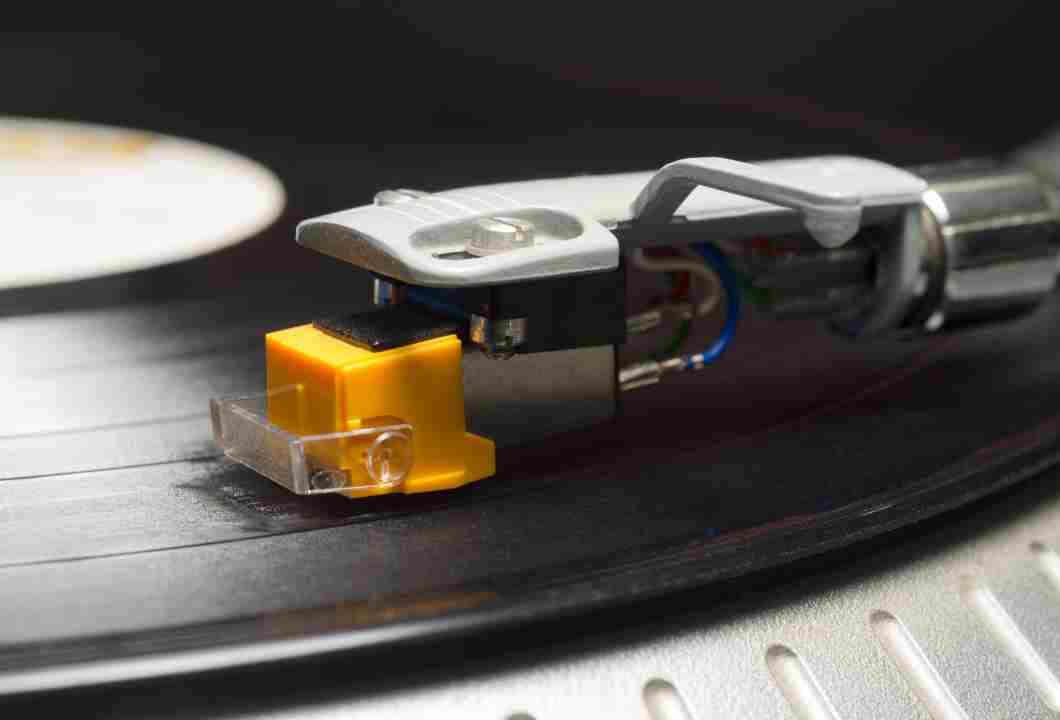
The revival of vintage audio has brought renewed attention to the smallest component in the analog chain and, paradoxically, the one with the greatest influence on sound: the cartridge. In restoration workshops, a recurring question appears whenever a classic turntable reaches the bench: should it run a Moving Magnet (MM) or a Moving Coil (MC) …

Vintage audio restoration often lives in details that most listeners never see. Few components illustrate this better than the belt that drives a belt-drive turntable. At first glance, it looks trivial: a loop of rubber connecting motor and platter. In practice, the belt is a precision element that directly affects speed stability, torque transfer, noise …